Two Women Who Refused to Stay in Their Place
Born from the vision of Madhu Vaishnav, this initiative was built on one fierce, simple belief: that women who step outside patriarchal norms to work, earn, create, and lead deserve not just an opportunity but recognition.
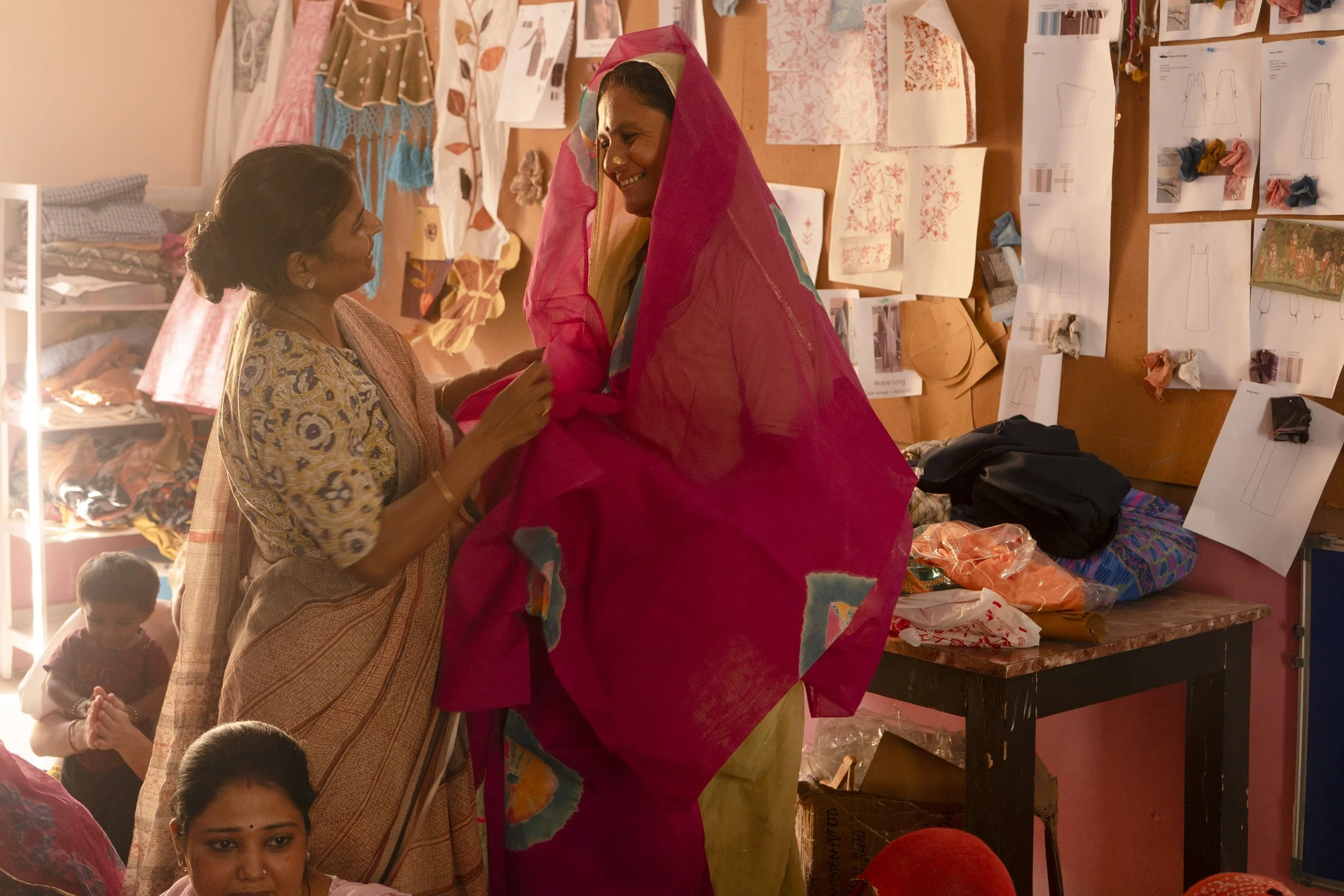
Madhu (founder of Saheli Women) felicitating Matli (Saheli woman of the monnth)
There is just a woman, her story, and a community that comes together to say: we see you, and what you have done matters.
Saheli Women of the Month is a celebration unlike most. There are no trophies here, no stage with bright lights, and no judges with scorecards. There is just a woman, her story, and a community that comes together to say: we see you, and what you have done matters. In the villages of Rajasthan, the act of being seen is rarer than it should be. Rural women carry extraordinary weight, extraordinary creativity and extraordinary courage through their days, and the world moves on without noticing. They raise families, hold communities together, but quietly dream of something more, often without anyone asking what that dream looks like.
Born from the vision of Madhu Vaishnav, this initiative was built on one fierce, simple belief: that women who step outside patriarchal norms to work, earn, create, and lead deserve not just an opportunity but recognition. Breaking the rules your community wrote before you were born is not a small thing.
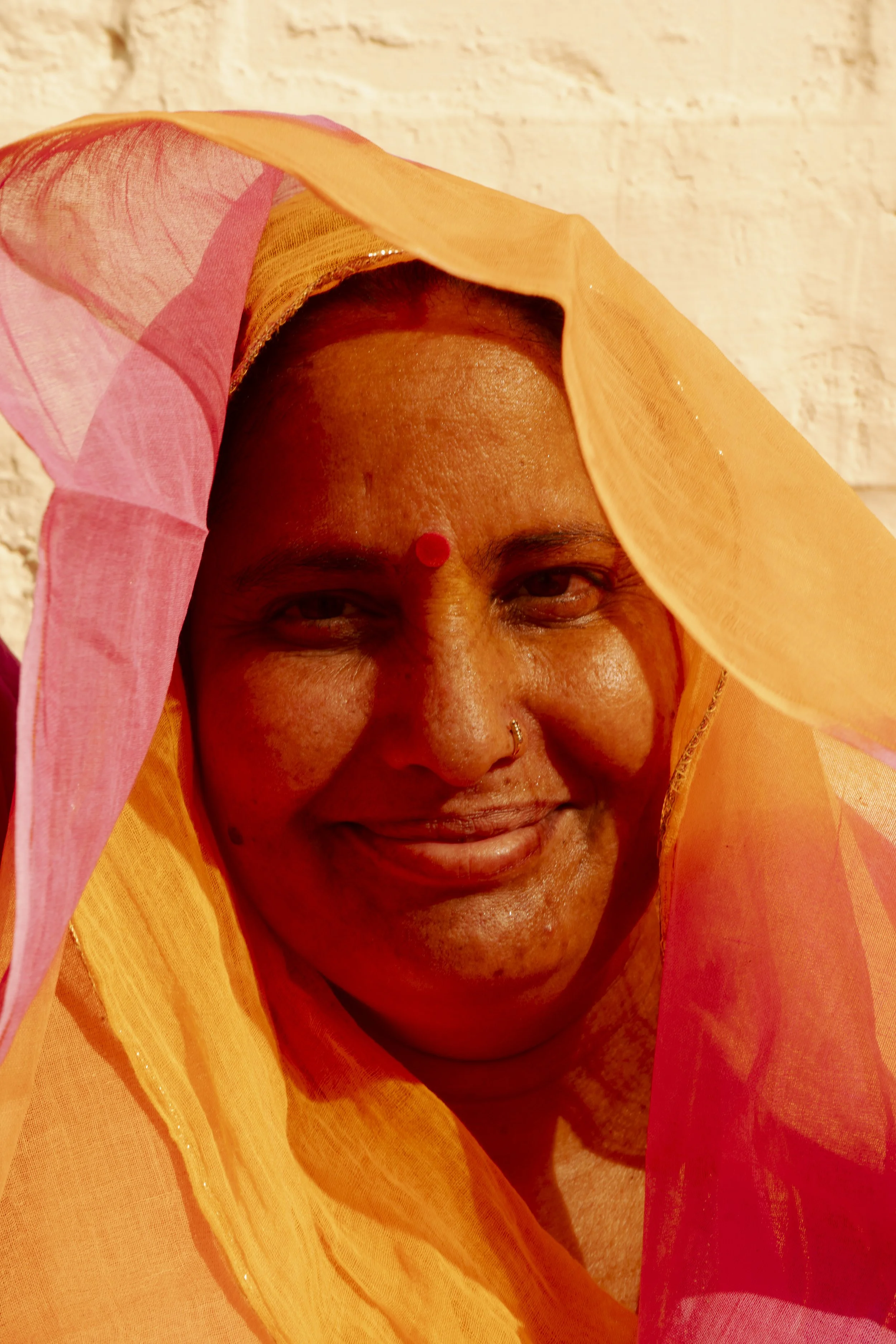
Kavita
Kavita Sat Down
In the villages around Jodhpur, caste determines not just your social circle but the entire geography of existence: who you share water with, whose hand you take food from, whose child you allow near yours. A woman who steps out of the caste line is not just breaking a rule, she is bringing shame upon her family, her husband, and her children.
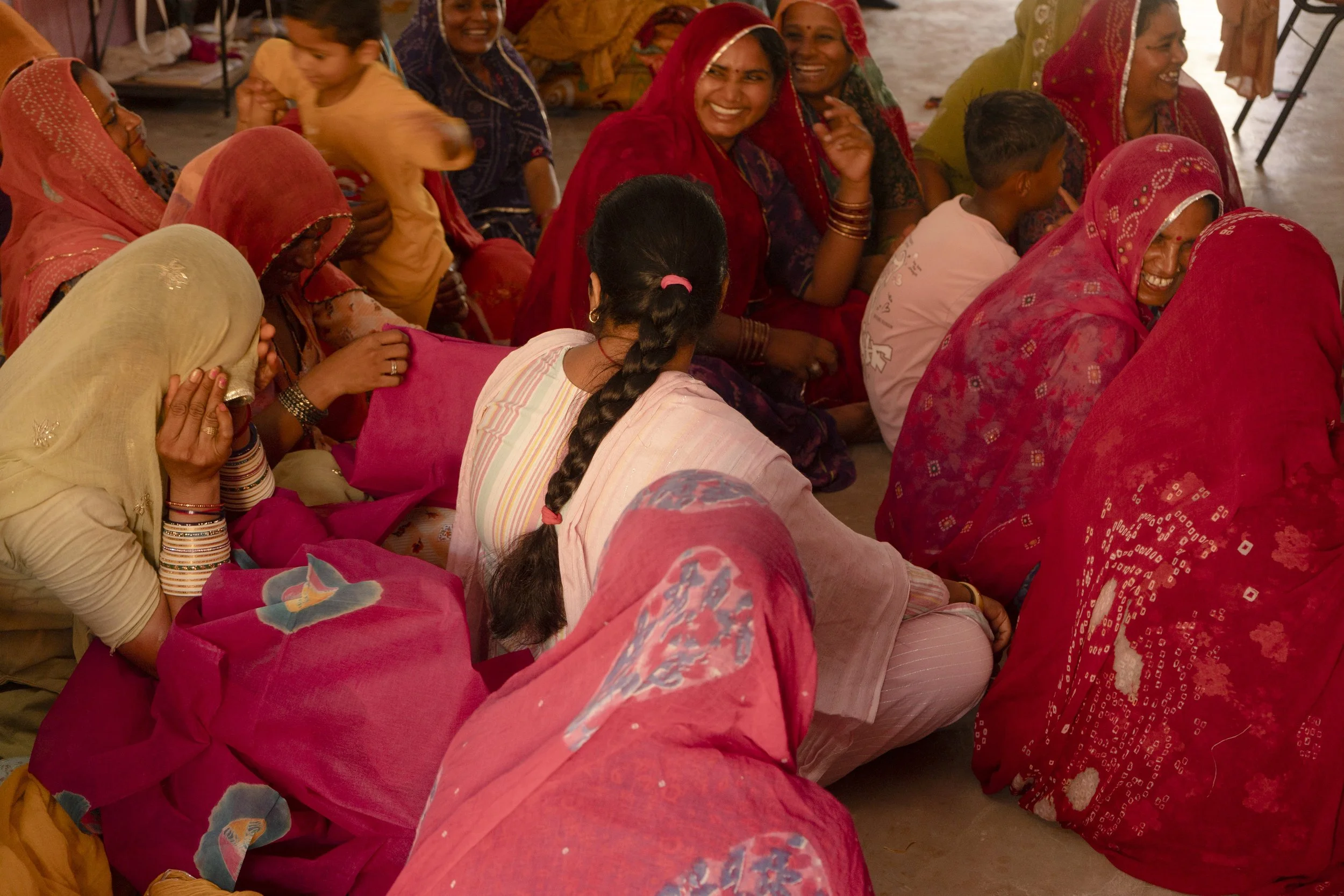
Every time she pulled up a chair at that table, she was pulling against decades of conditioning, of the voices in her own head that had been placed there long before she had the words to question them, and against the watchful eyes of a community that notices everything and forgives
very little.
And yet, she ate with women from the castes that her community had spent generations not eating with. She worked beside them, not above them, at a careful distance, or with a performance of tolerance that so many settle for, but truly with them–shoulder to shoulder, sharing a meal, sharing a laugh, and sharing the weight of a day's work. It was not simple. Every time she pulled up a chair at that table, she was pulling against decades of conditioning, of the voices in her own head that had been placed there long before she had the words to question them, and against the watchful eyes of a community that notices everything and forgives very little. But Kavita had understood something quietly extraordinary: that the most radical thing a person can do in a system built on separation is to refuse to be separated with the steady, daily, courageous act of showing up and sitting down.
Matli Lit the Room on Fire
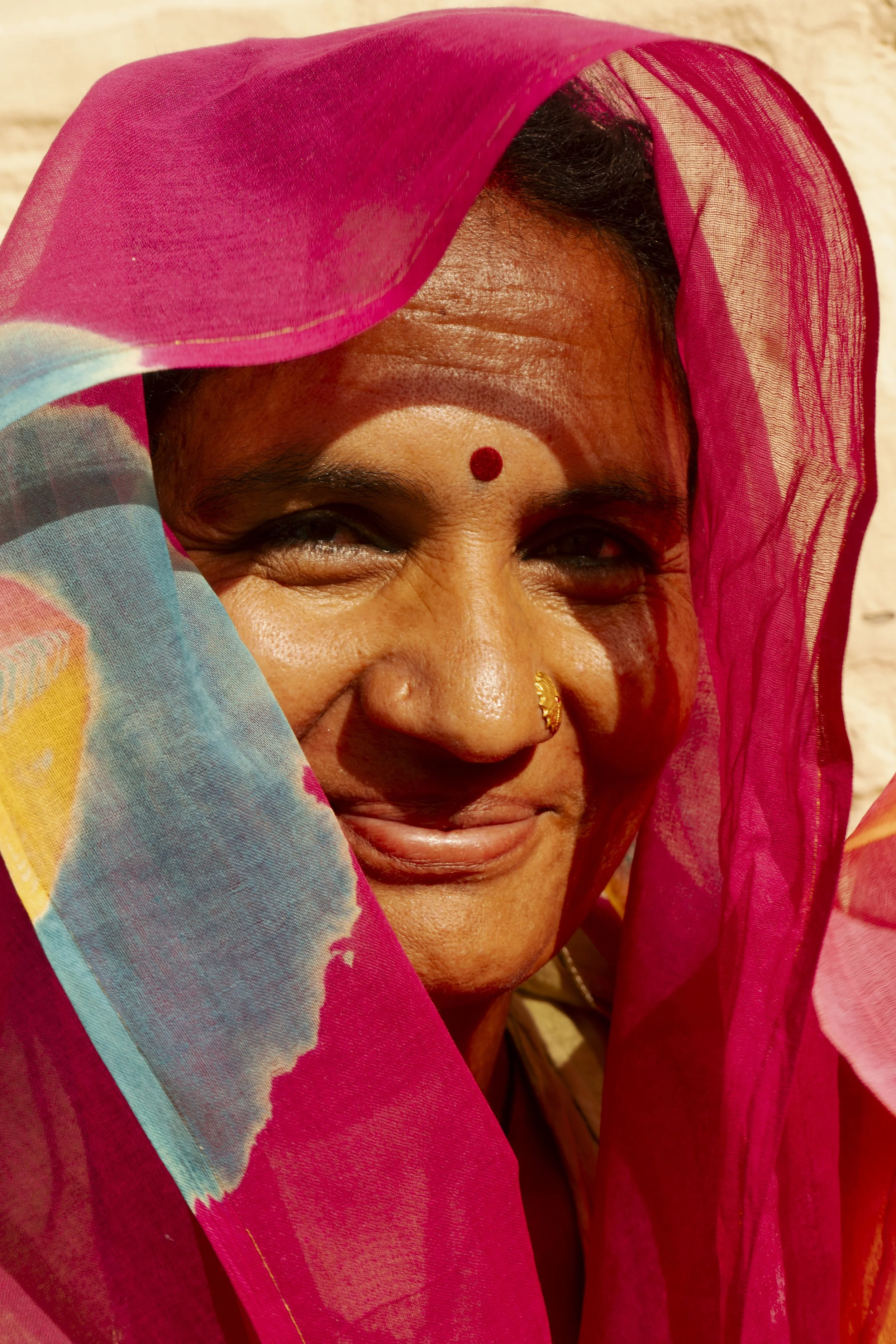
Matli
She created the rarest thing in any workplace: healthy competition. The kind that says, I believe you can do this, and I will push you until you believe it too.
Matli's story is different in its texture, but equal in its courage.
Matli arrived at the Saheli centre the way most of us do, uncertain, watchful, carrying the wariness of a woman who has learned not to take up too much space. But she was a frighteningly fast learner. And where others might have used that edge quietly, Matli turned her pace into a pulse for the entire room. She made learning into a game. Her approach was warm, generous, and wildly funny, where the point was never to humiliate but to make everyone want to play harder. Her laughter became the soundtrack of the centre.
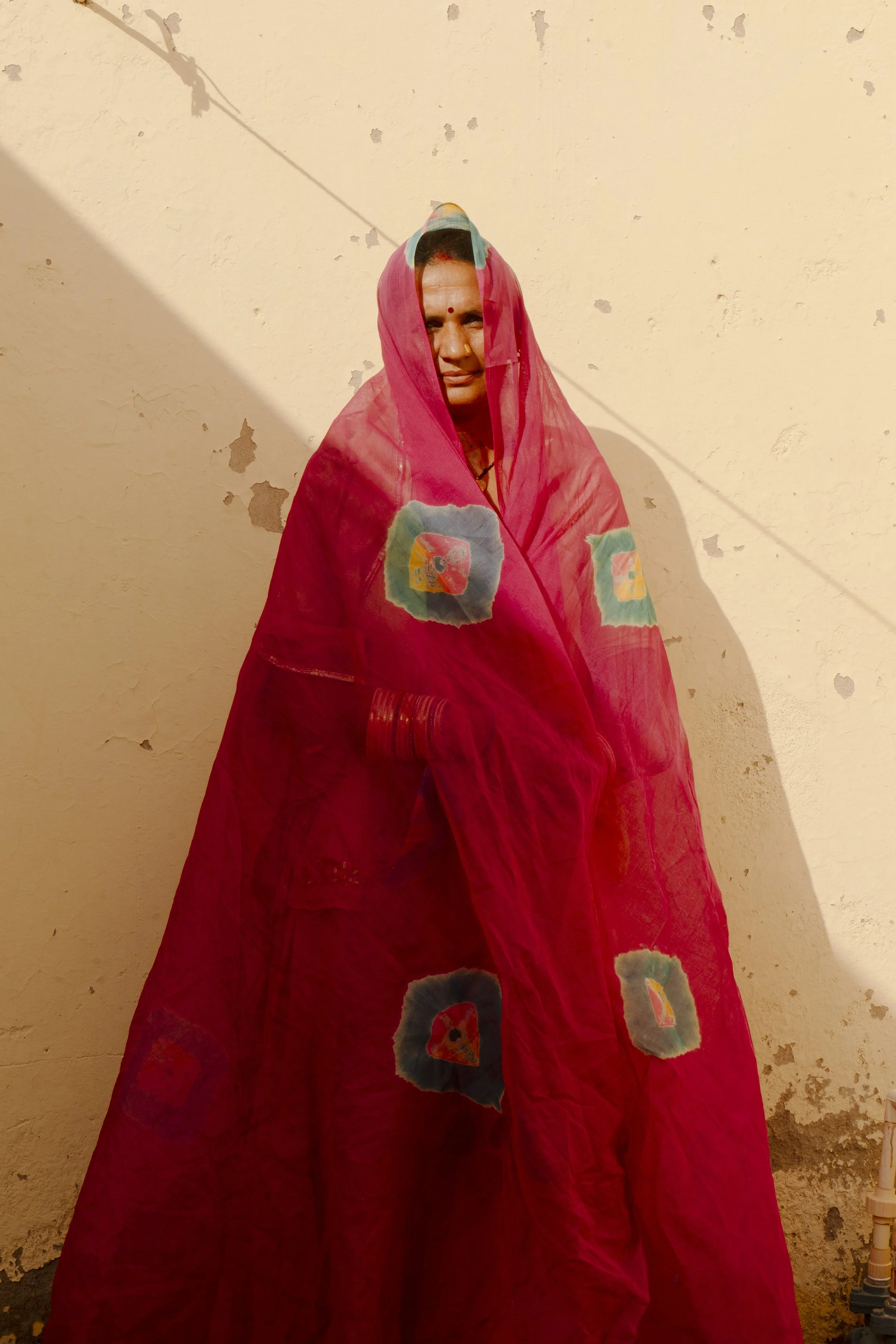
Matli standing tall
She created the rarest thing in any workplace: healthy competition. Not the cold, anxious kind. The kind that rises with every person in the room. The kind that says, I believe you can do this, and I will push you until you believe it too. And this is where Matli's story becomes a mirror for all of us. We live in work cultures that have forgotten how to be alive. We let rooms go quiet and call it professionalism. We mistake seriousness for depth. We let the warmth drain out of shared spaces, and our work becomes smaller for it. We slack in this, all of us.
Kavita and Matli are not the same woman, but there is a thread connecting them, and it runs straight through the heart of what Saheli has always been about. Both of them refused to accept the version of themselves that the world had pre-written. Kavita refused the script that said she must stay on her side of an invisible line. Matli refused the script that said she must be measured. Both of them, in their own way, looked at what was expected of them and chose something larger. In rural Rajasthan, where the expectations around women are still written in stone by those who never asked for their opinion, choosing something larger is not an abstract act of self-expression.
That is the story of this month's Saheli Women. Just two women who showed up every day.
We see you, Kavita. We see you, Matli.
Saheli Women of the Month.