

A History of Blue Woven Through Nature, Commerce, and the Sacred
Indigo, The Living Mother God
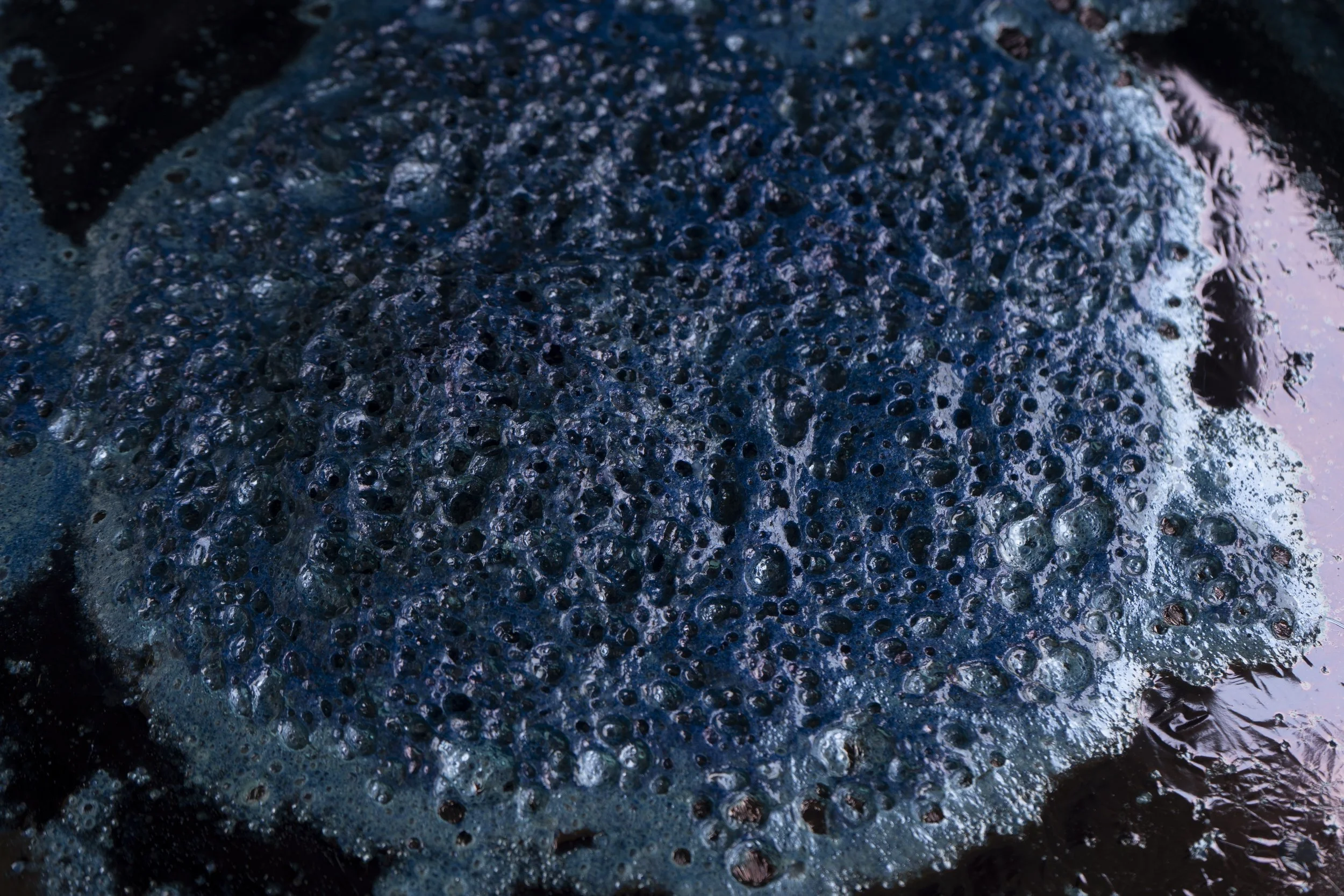
Indigo Vat
The history of indigo is among the longest continuous histories in human material culture. Long before the dye entered European vocabularies, before colonial plantations transformed it into a global commodity, and before chemists attempted to reproduce it in laboratories, indigo existed as a substance deeply tied to the landscapes and communities that first understood its transformative power. Its origins reach back to the second millennium BCE and the protohistoric city of Mohenjodaro in the Indus Valley, where scholars infer its earliest use. From there, indigo traveled across trade routes and linguistic worlds, carrying not only the capacity to dye cloth a lasting blue but also associations with divinity, fertility, and the mysteries of the natural world.
The etymology of indigo preserves the memory of India’s centrality to its history. The word derives from the Greek indikon and the Latin indicum, both meaning “a substance from India.” The Sanskrit nila, signifying deep blue, spread through Southeast Asia and the Near East, while Arab merchants carried the dye to North Africa and the Iberian Peninsula, where it became anil, the root of the Spanish and Portuguese terms. As scholars note, the economic history of indigo survives within its names, tracing ancient networks of caravans and ships that linked the subcontinent to the wider world.
Indigo was the quintessential blue dye in a world where all colorants came from plants and minerals. The leaves yielded colour through pressing and fermentation, making knowledge of the dye widespread wherever the plant grew. Climate determined its geography, indigo thrived in tropical regions. Oriental indigo reached Egypt and the Greco-Roman world as early as the second millennium BCE, though the difficulties of overland transport kept it rare and expensive. From the seventeenth to the nineteenth century, plant indigo became the dominant blue colorant of the modern world. The same blue that wrapped Egyptian mummies, adorned the carpets of Achilles, and illuminated the textiles of Asia spread across continents and classes alike.
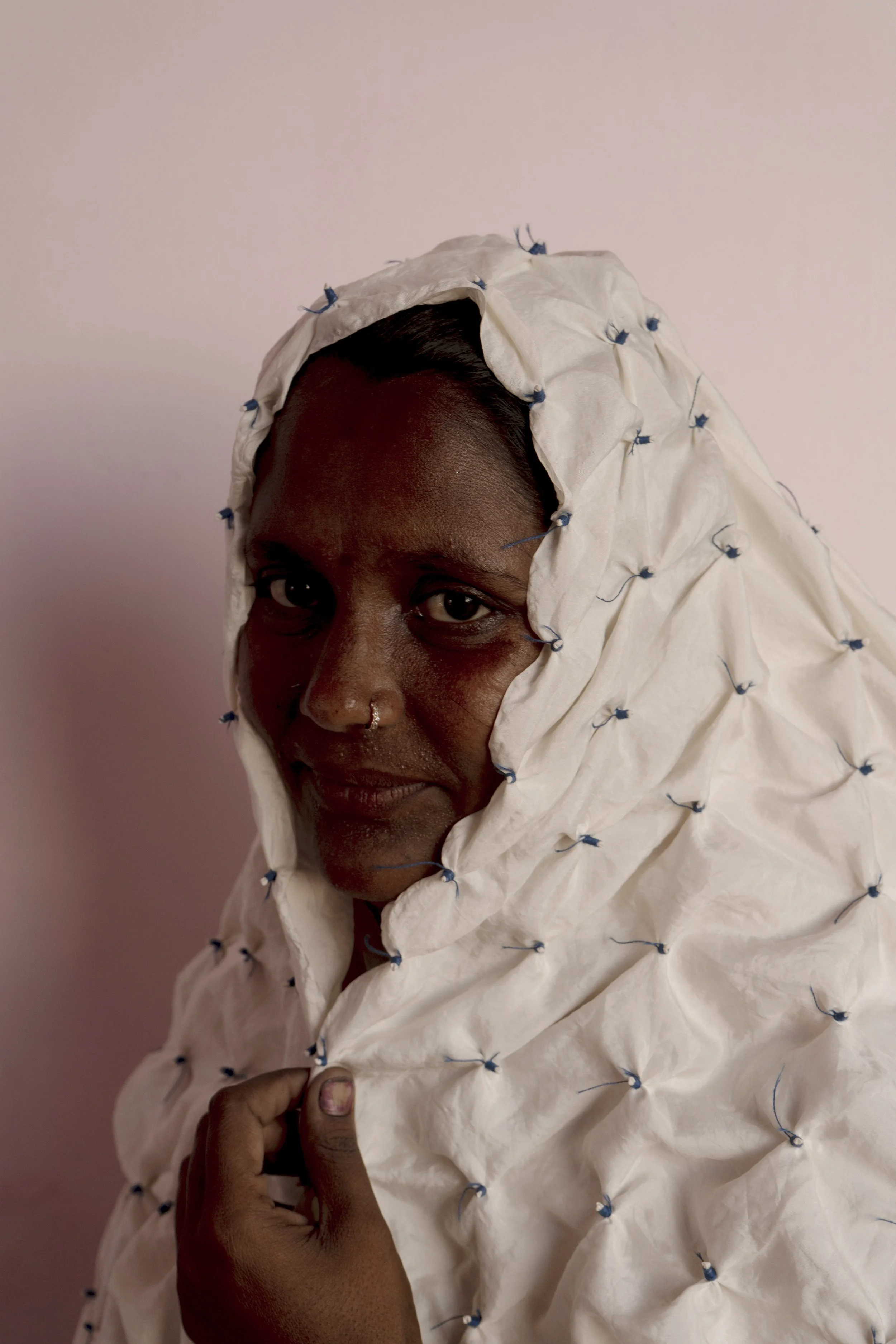
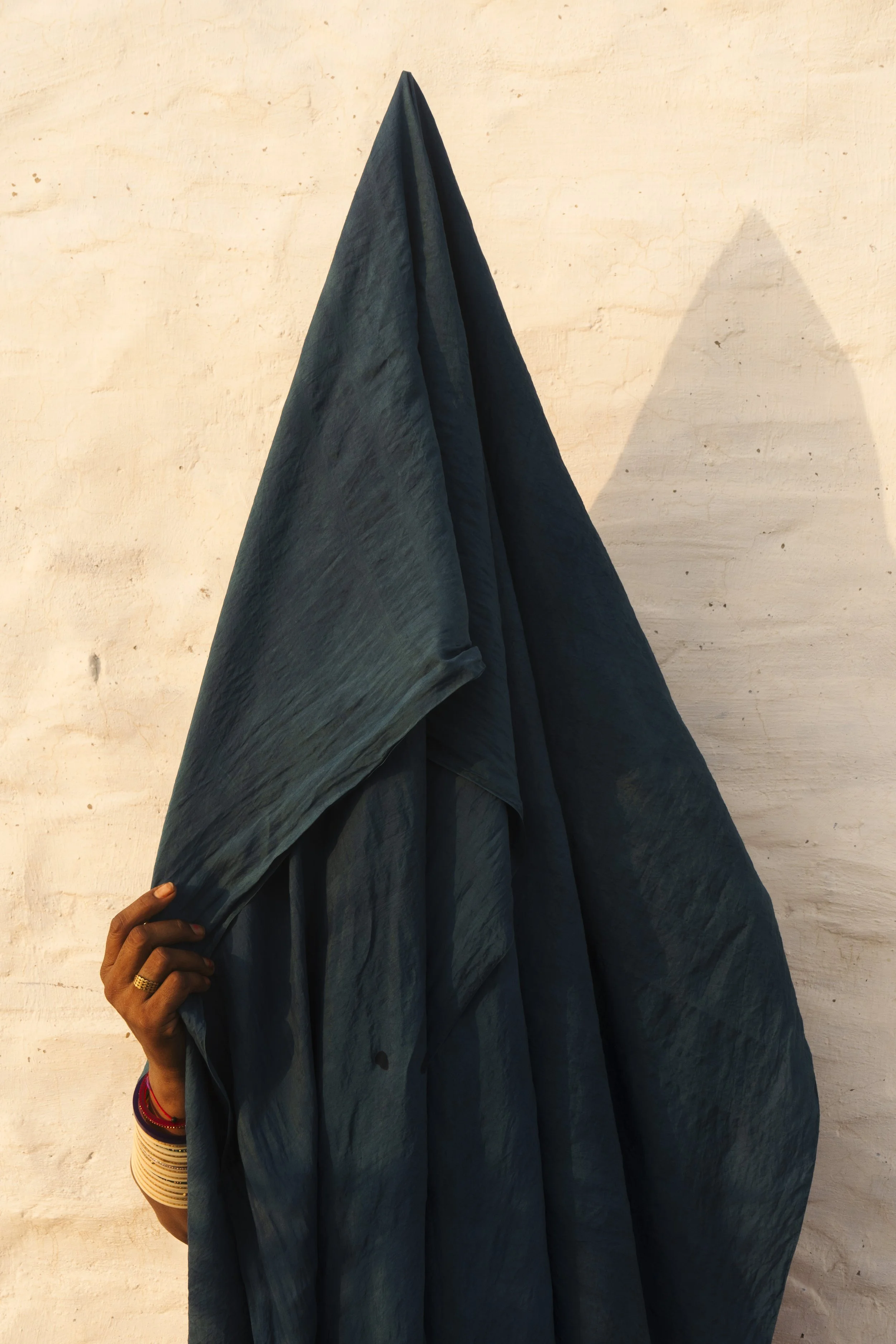
Khushboo from Saheli Women, natural dyeing department. Wearing fabric ready for indigo dyeing.
Yet the history of indigo is also inseparable from violence. In colonial Bengal, indigo plantations became sites of extreme exploitation, where peasants cultivated the crop under coercive systems designed to maximize profit while disregarding human welfare. Colonial land settlements, revenue systems, and labor laws created the conditions for large-scale indigo production, while British officials extracted and transplanted local knowledge from regions such as Gujarat into new plantation economies. At the same time, the nineteenth century transformed indigo from a craft rooted in natural knowledge into an object of scientific management. Laboratories and agricultural stations emerged across the colonial world, applying empirical science to improve yields and modify the plant itself. The dye increasingly moved from the field to the laboratory, from embodied practice to industrial experimentation. The greatest challenge came with the invention of synthetic indigo.
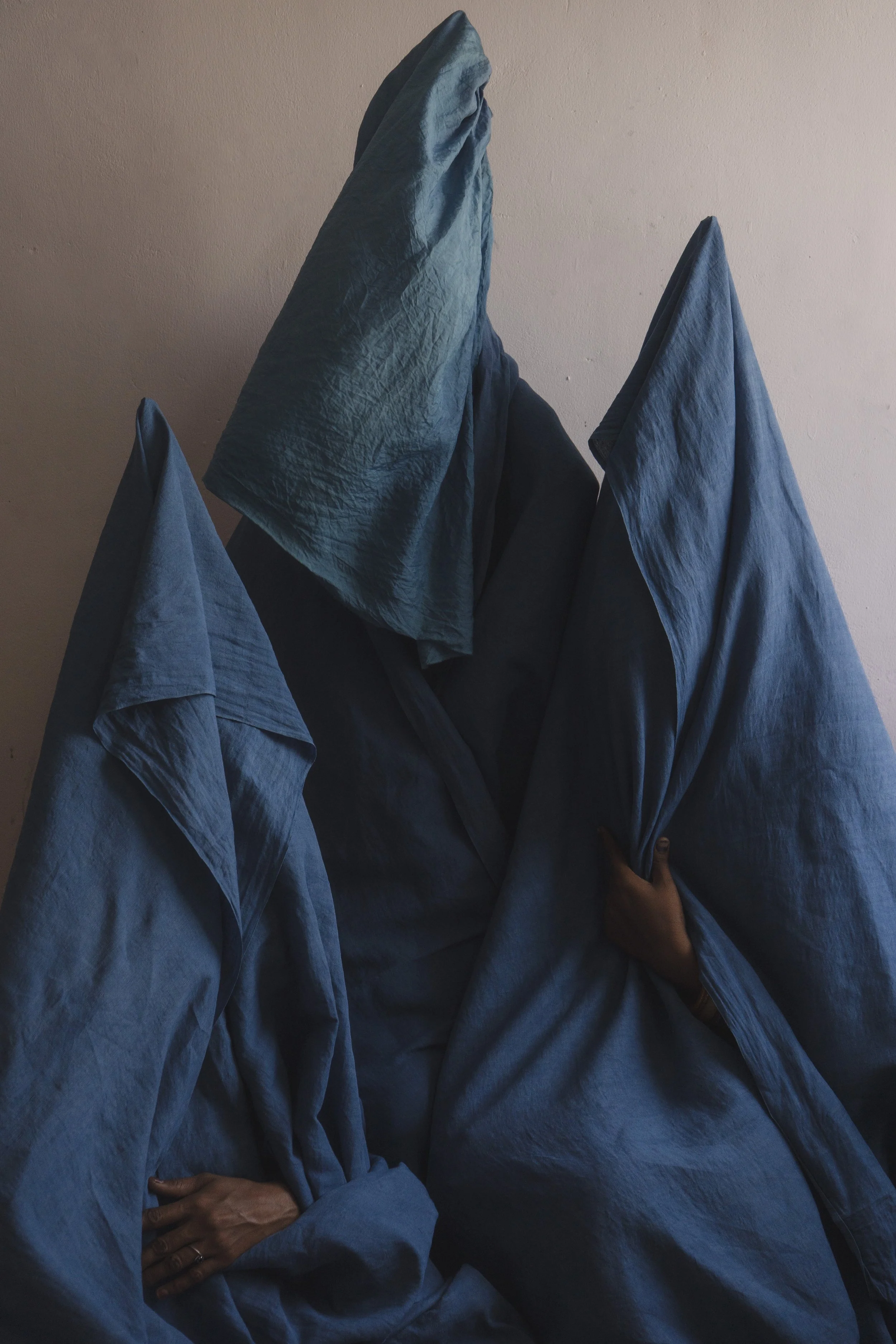
L-R Pinki, Baby, and Khushboo (from the natural dyeing team) draped in cotton dyed in indigo
Defenders of natural indigo argued that nothing produced in a chemical laboratory could equal what emerged from the “laboratory of nature,” where the living cells of the plant performed processes beyond human imitation. Yet indigo had never existed apart from human intervention. From the first cultivators who pressed leaves to release their colour, indigo had always been a collaboration between botanical process and human knowledge.
According to Madhu Vaishnav (founder of Saheli Women)—”in the Indian subcontinent, blue was associated with Krishna and Vishnu, with the infinite sky and ocean, and with divine protection. Kali and Krishna are rendered blue, while Shiva carries blue in his throat after consuming the poison of the cosmos so creation could survive. Blue was not merely symbolic beauty but a sign of divinity exceeding earthly form.”
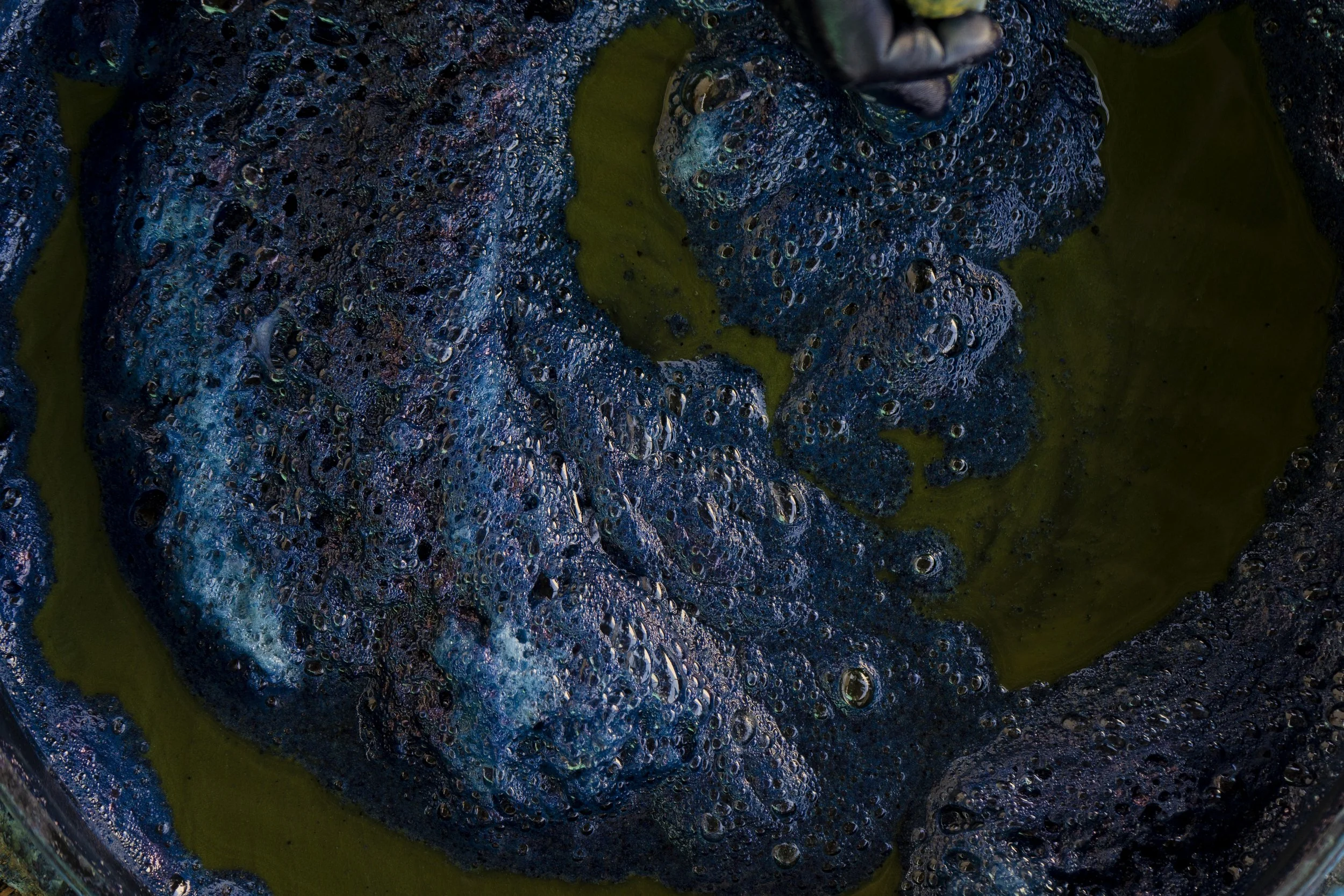
Indigo starts green before turning blue
The movement from green to blue also carried cosmological meaning. In Treta Yuga, Ram appears green and earthbound, closely tied to forest, kingdom, and dharma. In Dwapara Yuga, Krishna arrives blue, oceanic and expansive, embodying a more cosmic consciousness. Indigo follows this same transformation. The plant begins green and rooted in soil, then enters the dark warmth of the vat where fermentation dissolves its original form before it emerges blue. The dyeing process itself became a metaphor for spiritual transformation through surrender and rebirth.
Saheli Women, Matli in indigo cotton
The figure of the Mother Goddess, worshipped under many names across South Asia, was closely linked to fertility, agriculture, and the generative powers of the earth. Indigo cultivation existed within ritual systems that honoured the earth as a living mother whose blessings made harvest possible. Dyers and cultivators performed ceremonies to ensure the success of the crop and to give thanks for the transformation of leaf into pigment. In many traditions, the indigo vat itself was treated as a womb, a site of fermentation, creation, and renewal.
The violence of colonial plantations was therefore not only economic but epistemological, erasing the spiritual meanings that had surrounded the dye for centuries. Ironically, when advocates of natural indigo later invoked “God’s laboratory,” they echoed much older understandings of the plant as a site where divine creativity manifested in material form.
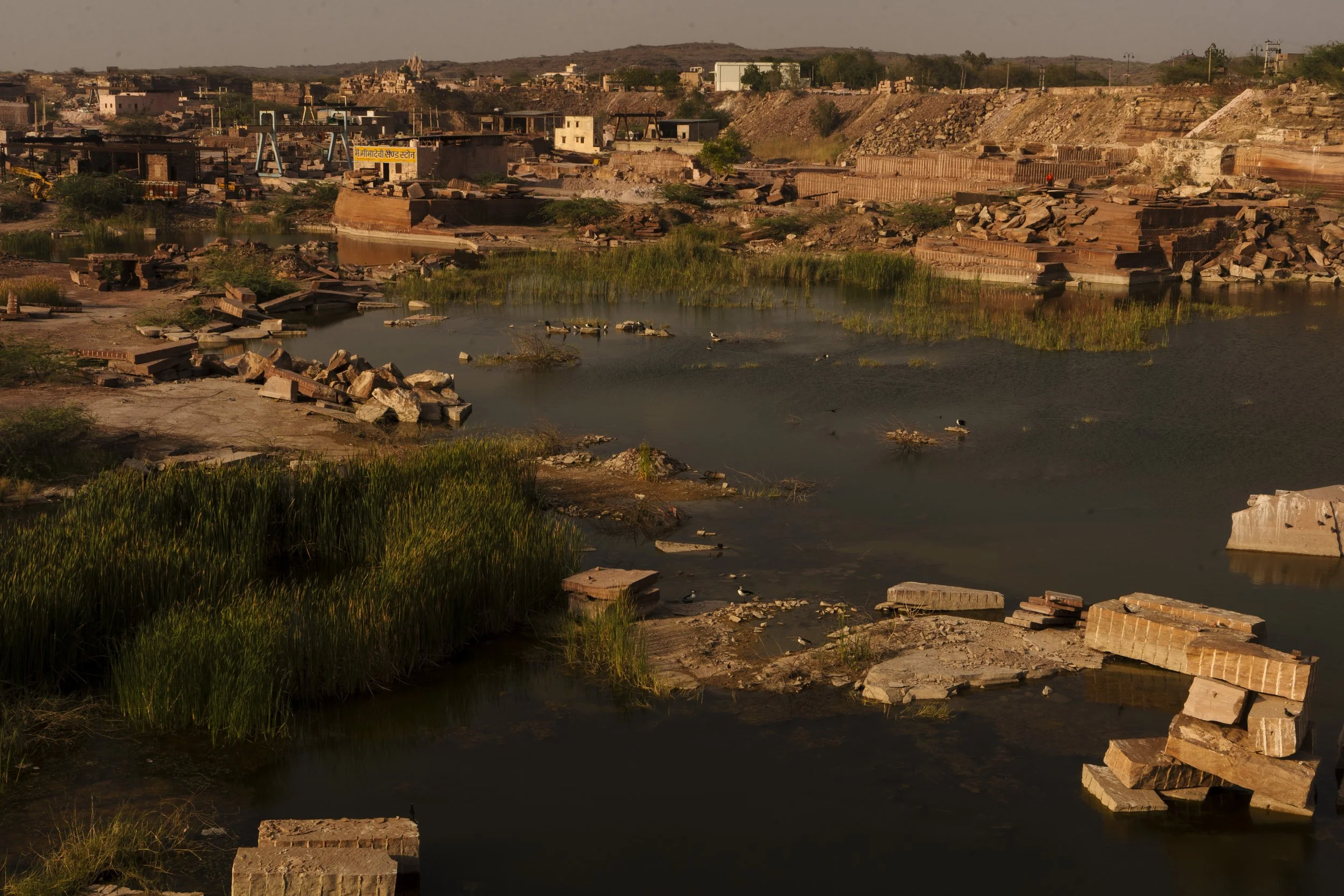
Synthetic indigo emerged from a fundamentally different relationship with nature, one that treated the natural world as material to be analysed and replicated rather than as a living force to be honoured. The triumph of synthetic dye marked not only a technological transition but also a transformation in human understanding, as the laboratory displaced the field and industrial modernity pushed older cosmologies to the margins.
Yet indigo endures. The plant still grows across tropical regions, and artisanal dyers continue to extract its colour through methods recognisable to their predecessors thousands of years ago. The deep blue remains associated with protection, spirituality, and transformation. In the continued practice of natural indigo dyeing survives an ancient relationship between human craft and divine nature, between cultivation and ritual, between the intelligence of the hand and the slow, intricate work of the plant itself.
With inputs from Madhu Vaishnav, Binnu bhaiya, Janki, Koshalya, Payal and Odyssey of Indigo 1.
Photographs and text by Aakansha Pandey